10 children on a boat without oars
How the family from Makiivka has survived
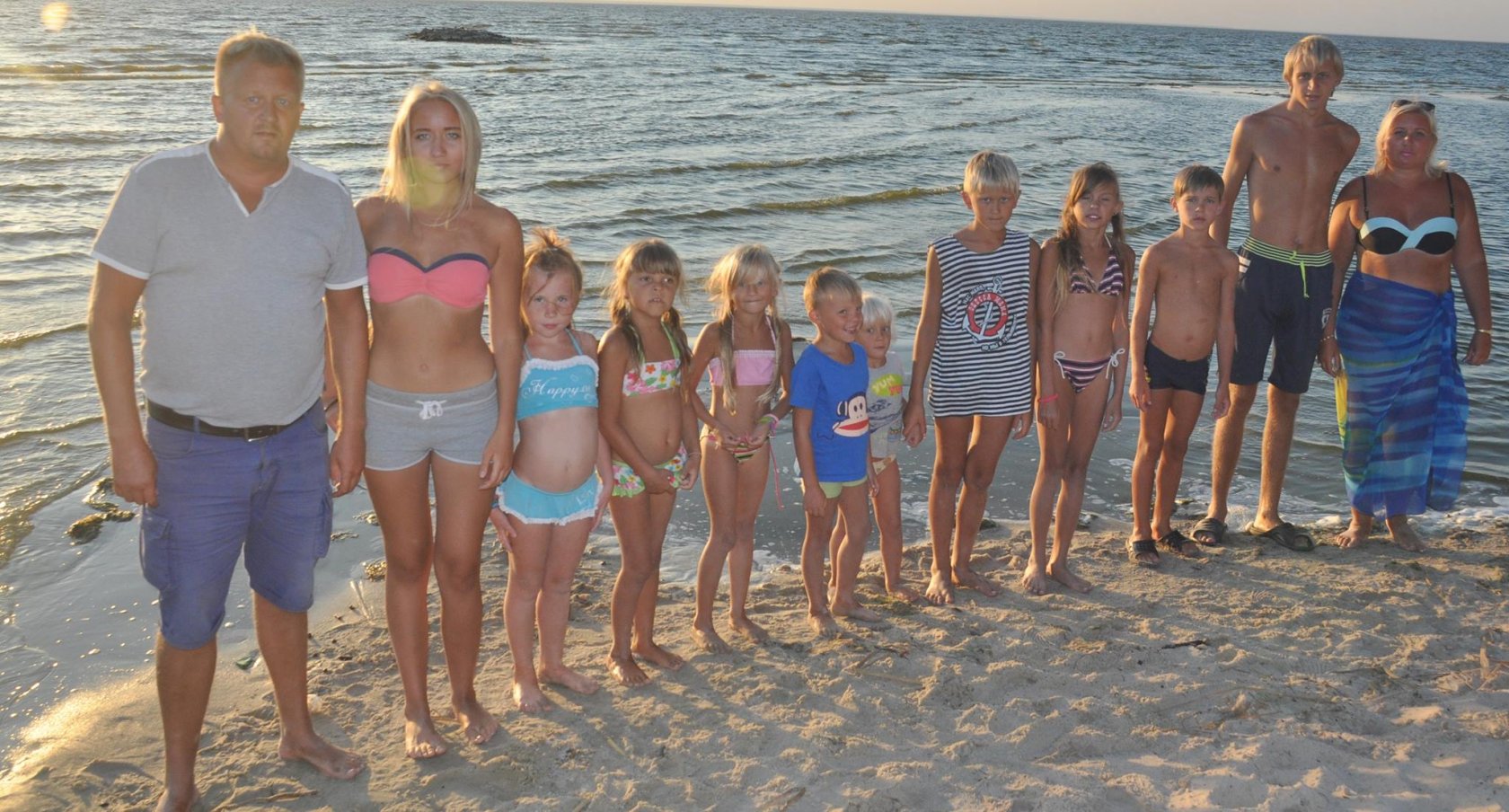
Denis and Daniil, both 11, have just returned from a walk. They visited their grandparents. "Watch out mom!" Denis pointed to the round of ammunition lay. "There is a man with a gun outside," he told his mother Diana. She was afraid. She understood that her big family of 10 children couldn't stay in Makiivka of Donetsk region anymore.
Two days later, on July 12, 2014, Russian tanks came to Makiivka. An acquaintance from a charity foundation called the Rodikov family and told them: "You should come to our sanatorium in Zaporizhia region and stay for 10 days. When things calm down in Makiivka, you could return back".
The Rodikov family packed their summer clothes, took their backpacks, and on July 14, went to the Zaporizhia region.
Two days later, on July 12, 2014, Russian tanks came to Makiivka. An acquaintance from a charity foundation called the Rodikov family and told them: "You should come to our sanatorium in Zaporizhia region and stay for 10 days. When things calm down in Makiivka, you could return back".
The Rodikov family packed their summer clothes, took their backpacks, and on July 14, went to the Zaporizhia region.
In the summer of 2014, the family-type children's home (FTCH) of Rodikovs didn't know that they won't come back home. They didn't know that their life would be divided in two parts: before and after the war.
Now they have a new house in the Kyiv region. Now they have new life. Kyiv calls them Internally Displaced People, they call themselves the nomads of the 21th century. Have these nomads from Donetsk region found comfort in the Ukrainian capital? Is there anything like home afield?
Now they have a new house in the Kyiv region. Now they have new life. Kyiv calls them Internally Displaced People, they call themselves the nomads of the 21th century. Have these nomads from Donetsk region found comfort in the Ukrainian capital? Is there anything like home afield?
Housing problem
There are 63 such displaced families in Ukraine. Most of them are not as lucky as the Rodikov family. As many as 17 children's homes didn't find a house and returned to DNR (self-proclaimed Donetsk People's Republic) or LNR (self-proclaimed Luhansk People's Republic), while 38 families still live in the occupied territories.
Former representative of the office of the Children's Ombudsman, Lyudmila Volynets, stated that nearly 90 percent of children's homes rent accommodation. According to her, the best situation is in the Kyiv region. Here, all FTCHs are provided with houses. In other regions, the condition is not the same, for example in Chornomorsk (Odessa region), the FTCH of Rudykh has to rent their own house since since the local government do not provide them with one.
Even though in April 2015 the central government approved a decree requiring local governments to provide FTCHs with houses, money was not allocated for them. That's why housing problems of children's houses are still very much present.
There are 63 such displaced families in Ukraine. Most of them are not as lucky as the Rodikov family. As many as 17 children's homes didn't find a house and returned to DNR (self-proclaimed Donetsk People's Republic) or LNR (self-proclaimed Luhansk People's Republic), while 38 families still live in the occupied territories.
Former representative of the office of the Children's Ombudsman, Lyudmila Volynets, stated that nearly 90 percent of children's homes rent accommodation. According to her, the best situation is in the Kyiv region. Here, all FTCHs are provided with houses. In other regions, the condition is not the same, for example in Chornomorsk (Odessa region), the FTCH of Rudykh has to rent their own house since since the local government do not provide them with one.
Even though in April 2015 the central government approved a decree requiring local governments to provide FTCHs with houses, money was not allocated for them. That's why housing problems of children's houses are still very much present.
Huge dream of a big family
Rodikov' house is located in the village of Gatne near Kyiv. It is a two-story building with four rooms and a stylish design. Family portraits cover a wall between the first and the second floor. Nastya and Artem are 6 years old, Milana, Carolina and Kateryna are 8 years old, Daniil and Denis, 11, Valeria,12, Olexandra, 17, and Bohdan, 19 years old.
Volodymyr Rodikov calls them twins and triplets despite only five of them are his biological children. Five other children are adopted. Volodymyr has fulfilled his dream, his big dream of having a big family.
The younger children embrace the guest without knowing name. Blue-eyed Nastya sits down on guest's lap and begins to chat. The parents ask Nastya and Artem to play together somewhere else. The children then take some tangerines and go to the second floor.
Rodikov' house is located in the village of Gatne near Kyiv. It is a two-story building with four rooms and a stylish design. Family portraits cover a wall between the first and the second floor. Nastya and Artem are 6 years old, Milana, Carolina and Kateryna are 8 years old, Daniil and Denis, 11, Valeria,12, Olexandra, 17, and Bohdan, 19 years old.
Volodymyr Rodikov calls them twins and triplets despite only five of them are his biological children. Five other children are adopted. Volodymyr has fulfilled his dream, his big dream of having a big family.
The younger children embrace the guest without knowing name. Blue-eyed Nastya sits down on guest's lap and begins to chat. The parents ask Nastya and Artem to play together somewhere else. The children then take some tangerines and go to the second floor.
A knife in the heart
Diana and Volodymyr sit down on a sofa in a hall nearby a huge aquarium. Volodymyr used to breed fish in Makiivka. Now he is engaged in online sales of aquarium supplies. Volodymyr has a pair of very expressive blue eyes.
Diana and Volodymyr met in Makiivka on New Year's Eve of 1995. They were 18 years old.
After New Year's party, he walked her home under the rain. He held her shoes under his jacket so they wouldn't get wet under the rain, while she walked in boots. Diana also put a bar of chocolate, presented to her by him, under her jacket. Diana was smitten with his sense of humor and courtesy.
Diana told Volodymyr that she grew up as an only child. When she was one year old, her parents got divorced. Diana was raised by her grandmother who was a Protestant and she taught her not to lie, not to steal, to be diligent, and to be a good person. Volodymyr has an older sister. He thought his parents stayed together only because of their children. He saw them quarelling and fighting and he realized that his life would be different. That was the time when he became to dream about having a big and happy family.
When Volodymyr met Diana, who also wanted to have a lot of children, he didn't think for long.
On October 6, 1995 Volodymyr and Diana got married.
Volodymyr initially worked as a manager in a construction company, then he quitted and started his own fish farm. Diana worked for several years as a gas inspector in the workshop.
Diana and Volodymyr sit down on a sofa in a hall nearby a huge aquarium. Volodymyr used to breed fish in Makiivka. Now he is engaged in online sales of aquarium supplies. Volodymyr has a pair of very expressive blue eyes.
Diana and Volodymyr met in Makiivka on New Year's Eve of 1995. They were 18 years old.
After New Year's party, he walked her home under the rain. He held her shoes under his jacket so they wouldn't get wet under the rain, while she walked in boots. Diana also put a bar of chocolate, presented to her by him, under her jacket. Diana was smitten with his sense of humor and courtesy.
Diana told Volodymyr that she grew up as an only child. When she was one year old, her parents got divorced. Diana was raised by her grandmother who was a Protestant and she taught her not to lie, not to steal, to be diligent, and to be a good person. Volodymyr has an older sister. He thought his parents stayed together only because of their children. He saw them quarelling and fighting and he realized that his life would be different. That was the time when he became to dream about having a big and happy family.
When Volodymyr met Diana, who also wanted to have a lot of children, he didn't think for long.
On October 6, 1995 Volodymyr and Diana got married.
Volodymyr initially worked as a manager in a construction company, then he quitted and started his own fish farm. Diana worked for several years as a gas inspector in the workshop.
Reflections on adoption
Over a year after the wedding Diana couldn't become pregnant. They decided to adopt a child. When they began to discuss the possibility, Diana became pregnant. Bohdan, then Olexandra, and then Daniil, were soon born.
Diana expected the fourth baby, but the baby died before birth. They started to think about adoption again. Then they came to an orphanage for the first time. The boy ran up to Volodymyr and asked if he was his father. "It was like a knife in the heart," said Volodymyr.
"Adoption is a very difficult step. It's someone else's child, it is necessary to accept his or her not only into the family, but into your heart too," thought Volodymyr.
While they were preparing for documents, Diana learned she was expecting a fifth baby, Nastya. The pregnancy was difficult. The doctors advised to have an abortion because the child could be born with pathologies. There was still 25 percent possibilities that the child would be born healthy.
- Then it will be the 25 percent, Diana said to the doctors.
- We have never seen before the fifth child so desired, the doctors answered.
Nastya was born with the weight of 1.2 kg. After her birth, Diana was told that she wouldn't be able to have children anymore. Both the doctors and the parents battled for Nastya's life for three months. Finally she got better.
"When Nastya was in the hospital, it was unknown whether she would survive. Then I remembered how many times we wanted to adopt a child. While we and our children were still young, we had to do it," Volodymyr said. Diana agreed.
Over a year after the wedding Diana couldn't become pregnant. They decided to adopt a child. When they began to discuss the possibility, Diana became pregnant. Bohdan, then Olexandra, and then Daniil, were soon born.
Diana expected the fourth baby, but the baby died before birth. They started to think about adoption again. Then they came to an orphanage for the first time. The boy ran up to Volodymyr and asked if he was his father. "It was like a knife in the heart," said Volodymyr.
"Adoption is a very difficult step. It's someone else's child, it is necessary to accept his or her not only into the family, but into your heart too," thought Volodymyr.
While they were preparing for documents, Diana learned she was expecting a fifth baby, Nastya. The pregnancy was difficult. The doctors advised to have an abortion because the child could be born with pathologies. There was still 25 percent possibilities that the child would be born healthy.
- Then it will be the 25 percent, Diana said to the doctors.
- We have never seen before the fifth child so desired, the doctors answered.
Nastya was born with the weight of 1.2 kg. After her birth, Diana was told that she wouldn't be able to have children anymore. Both the doctors and the parents battled for Nastya's life for three months. Finally she got better.
"When Nastya was in the hospital, it was unknown whether she would survive. Then I remembered how many times we wanted to adopt a child. While we and our children were still young, we had to do it," Volodymyr said. Diana agreed.
Why family-type children's homes exists?
Finally Volodymyr and Diana decided to take the child from an orphanage. They wanted to adopt, but the social workers changed their minds. They explained that 70 percent of children in the orphanages could not be adopted, because their parents were only temporarily deprived of their parental rights. For example, the child of an unwed mother who was in prison. Even so, these parents very rarely restored their rights. After the children reached the age of 16, they left the orphanage and often became sex-workers, drug addicts or criminals. The second way is to get into a family. Rodikovs were suggested to take care of the brother and the sister.
When Diana and Volodymyr went to meet 3-year-old Katya with flecks of sunlight, she hardly talked.
- Katya, they are your father and mother. Do you like them? The director of the orphanage asked.
- Yes, she said decisive without looking at them.
Then family went to another orphanage and met Denis. Soon, these chosen children filled the house. Denis and Katya have different fathers, but one mother. Katya's father was imprisoned. Police reported probably their mother was burned to death, but there is no official confirmation therefore she still had a missing status. Katya and Denis could not be officially adopted, but they could live with a family, so they finally did.
After three months, Volodymyr suggested to Diana to take three more children and to create a family type children's home (before they were a foster family). Diana didn't have to think for long before making a decision.
They went to the orphanage again. 4-year-old Milana came home with them. She immediately sat down on Volodymyrs' lap, embraced his neck and asked: "Do you have a car?" Volodymyr then thought Milana would become a successful business lady.
Finally Volodymyr and Diana decided to take the child from an orphanage. They wanted to adopt, but the social workers changed their minds. They explained that 70 percent of children in the orphanages could not be adopted, because their parents were only temporarily deprived of their parental rights. For example, the child of an unwed mother who was in prison. Even so, these parents very rarely restored their rights. After the children reached the age of 16, they left the orphanage and often became sex-workers, drug addicts or criminals. The second way is to get into a family. Rodikovs were suggested to take care of the brother and the sister.
When Diana and Volodymyr went to meet 3-year-old Katya with flecks of sunlight, she hardly talked.
- Katya, they are your father and mother. Do you like them? The director of the orphanage asked.
- Yes, she said decisive without looking at them.
Then family went to another orphanage and met Denis. Soon, these chosen children filled the house. Denis and Katya have different fathers, but one mother. Katya's father was imprisoned. Police reported probably their mother was burned to death, but there is no official confirmation therefore she still had a missing status. Katya and Denis could not be officially adopted, but they could live with a family, so they finally did.
After three months, Volodymyr suggested to Diana to take three more children and to create a family type children's home (before they were a foster family). Diana didn't have to think for long before making a decision.
They went to the orphanage again. 4-year-old Milana came home with them. She immediately sat down on Volodymyrs' lap, embraced his neck and asked: "Do you have a car?" Volodymyr then thought Milana would become a successful business lady.
Milana's sister, Lera, was 7 years old, Artem was 2. When Lera met Diana and Volodymyr for the first time, she thought they would have always been her parents.
Volodymyr decided to learn about their past. They had lived in a two-room apartment. The children had lived in one room, there was a drug den in another room. Artem had spent the first year in a baby stroller. He was never let outside. In 2 years he wasn't able to smile.
As it turned out, Artem's and Milana's father died in prison. Law enforcers could not find their mother. Then Volodymyr found her. She went out of the house, he gave her a document of the deprivation of parental rights.
- Do the children have everything? she asked.
- Yes. They are already in the family, Volodymyr answered.
The mother turned around and went the other way.
Volodymyr decided to learn about their past. They had lived in a two-room apartment. The children had lived in one room, there was a drug den in another room. Artem had spent the first year in a baby stroller. He was never let outside. In 2 years he wasn't able to smile.
As it turned out, Artem's and Milana's father died in prison. Law enforcers could not find their mother. Then Volodymyr found her. She went out of the house, he gave her a document of the deprivation of parental rights.
- Do the children have everything? she asked.
- Yes. They are already in the family, Volodymyr answered.
The mother turned around and went the other way.
Children were brought to the house of Rodikov. When Lera came into the family, it seemed to her that she had always been a part of it. Not only parents, but also new siblings helped her to feel this.
Meanwhile her brother Artem sat down in a chair the first day they came. He sat in a chair for two days, looking at one fixed point. Volodymyr suspected the boy had autism. The next day, new sisters began to play with Artem. They chased a rabbit and Artem joined them.
Volodymyr's dream came true. There were a couple of twins and two couples of triplets in the family. Suddenly a weapon was shot.
Meanwhile her brother Artem sat down in a chair the first day they came. He sat in a chair for two days, looking at one fixed point. Volodymyr suspected the boy had autism. The next day, new sisters began to play with Artem. They chased a rabbit and Artem joined them.
Volodymyr's dream came true. There were a couple of twins and two couples of triplets in the family. Suddenly a weapon was shot.
Aftermath of war in Kyiv
Meanwhile, the other children's home of Gedz in Kyiv were frightened of the situation in the country. The beginning of the war urged Gedz to adopt all 12 children as the family- type children's home is only a temporary place for orphans. Their biological parents could restore parental rights and at any time take away children. Natalia and Sergiy Gedz were afraid of it, therefore they wanted to adopt all the children.
They went to the courts many times, because the adoption decision was taken by the judge for each child separately. After a year of litigation process, they were able to adopt the children. It was the only children's home in the capital where all the children were adopted in 2016.
On the other hand, Volodymyr and Diana Rodikov do not want to adopt the children. They think that their children should decide when they are adult whether they want to take the Rodikov's surname.
Meanwhile, the other children's home of Gedz in Kyiv were frightened of the situation in the country. The beginning of the war urged Gedz to adopt all 12 children as the family- type children's home is only a temporary place for orphans. Their biological parents could restore parental rights and at any time take away children. Natalia and Sergiy Gedz were afraid of it, therefore they wanted to adopt all the children.
They went to the courts many times, because the adoption decision was taken by the judge for each child separately. After a year of litigation process, they were able to adopt the children. It was the only children's home in the capital where all the children were adopted in 2016.
On the other hand, Volodymyr and Diana Rodikov do not want to adopt the children. They think that their children should decide when they are adult whether they want to take the Rodikov's surname.
Quarrels with Neighbors
Bogdan studied in a Russian school in Makiivka, while Olexandra in Ukrainian one. There was no tension in the region, the parents confirmed.
"Imagine that I have a friendly neighbor, with good relationship. If my neighbor suddenly climbs over my fence, then he is a thief. Friendship ends," says Volodymyr.
He visited many cities in Russia and was sure Moscow would not help the Donbass, because it had its own problems.
"Ukraine lived without war for 22 years. I always wondered how the CIS republics faced terrorist attacks, wars. Ukrainians were fighting only in the parliament, people watched it on TV and that's all. After the beginning of the occupation some people actually supported the separatists, but many were afaird, were lost, because we all used to be peaceful people," says the father.
The conflict grew gradually. DNR separatists arrived in Makiivka and wanted to organize their headquarters in the health resort for miners.
- We will protect you and your grandparents, the separatists suggested.
- We are able to protect our families by ourselves. If you want to fight, go to the field and build shelter for yourself there.
The fight started.
It was the beginning of conflict. Soon armed men began to walk around the city. No one could oppose them.
The family then decided to go to Lviv and take part in the exchange programme "Единая страна – Єдина країна" ("The united country"). They were invited for two weeks in Easter to get acquainted with the culture of the city.
"I became wary, thinking how these western Ukrainians will meet us, the Russian-speaking people from Donbass. Then I resolved to arrange an experiment. I went to the supermarket and the cashier immediately started to speak Russian. I could not believe it, I thought it was just a coincidence, then I went to another supermarket. It was the same," said Volodymyr about his fight with stereotypes.
When the family returned to Makiivka, neighbors started calling them banderivtsi and the Nazis. Hostility escalated.
Bogdan studied in a Russian school in Makiivka, while Olexandra in Ukrainian one. There was no tension in the region, the parents confirmed.
"Imagine that I have a friendly neighbor, with good relationship. If my neighbor suddenly climbs over my fence, then he is a thief. Friendship ends," says Volodymyr.
He visited many cities in Russia and was sure Moscow would not help the Donbass, because it had its own problems.
"Ukraine lived without war for 22 years. I always wondered how the CIS republics faced terrorist attacks, wars. Ukrainians were fighting only in the parliament, people watched it on TV and that's all. After the beginning of the occupation some people actually supported the separatists, but many were afaird, were lost, because we all used to be peaceful people," says the father.
The conflict grew gradually. DNR separatists arrived in Makiivka and wanted to organize their headquarters in the health resort for miners.
- We will protect you and your grandparents, the separatists suggested.
- We are able to protect our families by ourselves. If you want to fight, go to the field and build shelter for yourself there.
The fight started.
It was the beginning of conflict. Soon armed men began to walk around the city. No one could oppose them.
The family then decided to go to Lviv and take part in the exchange programme "Единая страна – Єдина країна" ("The united country"). They were invited for two weeks in Easter to get acquainted with the culture of the city.
"I became wary, thinking how these western Ukrainians will meet us, the Russian-speaking people from Donbass. Then I resolved to arrange an experiment. I went to the supermarket and the cashier immediately started to speak Russian. I could not believe it, I thought it was just a coincidence, then I went to another supermarket. It was the same," said Volodymyr about his fight with stereotypes.
When the family returned to Makiivka, neighbors started calling them banderivtsi and the Nazis. Hostility escalated.
Break with the past
Then Denis and Daniil found bullet shells.
Olexandra remembers those days very well. She finished the 9th grade and passed exams at school. The next day, she would have a prom.
The family discussed the possibility of leaving the city, but without a certain date. On the day of the prom, July 14, the parents woke the children up at five in the morning. Then they left their home for good.
"It was the hardest moment in our life. We have abandoned the house, to which our hearts and souls belonged, and we have cut off communications with our relatives. We have cut off our roots from the earth from which we have grown", Diana said.
On July, 25, 2014 the DPR had forbidden the evacuation of orphans. Rodikovs realized they wouldn't be able to come back home. They had become nomads.
"Now we understand our grandfathers and grandmothers, who said that there is life before and after the war. Our lives are now divided," says Diana.
Olexandra remembers those days very well. She finished the 9th grade and passed exams at school. The next day, she would have a prom.
The family discussed the possibility of leaving the city, but without a certain date. On the day of the prom, July 14, the parents woke the children up at five in the morning. Then they left their home for good.
"It was the hardest moment in our life. We have abandoned the house, to which our hearts and souls belonged, and we have cut off communications with our relatives. We have cut off our roots from the earth from which we have grown", Diana said.
On July, 25, 2014 the DPR had forbidden the evacuation of orphans. Rodikovs realized they wouldn't be able to come back home. They had become nomads.
"Now we understand our grandfathers and grandmothers, who said that there is life before and after the war. Our lives are now divided," says Diana.
Life after the war
The sanatorium in Zaporizhia, to which they were invited by acquaintances from the charity foundation, was summerish. Rodikovs began to think about the future. They packed up and went to Kyiv. Volodymyr wrote on Facebook: "I'm going to Kyiv and will stand at the train station with a sign written: 'A big family looking for a house'".
Then Mykola Kuleba, the head of social services in Kyiv, called and offered to help.
"I was scared. We went into the unknown. In an instant, I saw the picture: an open book, turned to a clean sheet and a pen began to write. Then I said to my wife: 'We started with a clean slate.' And we started everything from nothing", - said Volodymyr.
The family lived in a Christian school in Fastiv in the Kyiv region until September 1, 2014. Volodymyr started writing letters to the President, Prime Minister, and to the Ministry of Social Policy. The answers that came were always the same: "I understand the problem, but I could not help."
Volodymyr called the wife of the President, Maryna Poroshenko.
- We have no resources, her assistant said.
- Does someone in this country have a resource? Whom do I need to write? Volodymyr broke down and got off the phone.
During that time, the family had no money, clothes, food, they survived from the generosity of fellow Ukrainians.
"They say that we do not choose a home. We have never had a negative attitude to the country, despite of politicians. They are not a country, they are not the homeland," said Diana.
One day, two men arrived to the church in Fastiv. They brought a box full of sweets and gave money.
- Who are you? Volodymyr asked.
- My name is Vasyl, one of them answered.
The second did not answer, turned around and walked away. Diana said they were like angels.
Another charity foundation bought clothes for all the children, and gave away vouchers worth of 15 thousand hryvnias.
Two weeks later, the assistant of Maryna Poroshenko came. On August 30, 2014, he proposed to move them to Kyiv-Svyatoshinsky district in a five-room apartment. Meanwhile businessperson Bogdan Titov began to build a home for the family.
On June 1, 2015 the family celebrated housewarming of their new house.
The sanatorium in Zaporizhia, to which they were invited by acquaintances from the charity foundation, was summerish. Rodikovs began to think about the future. They packed up and went to Kyiv. Volodymyr wrote on Facebook: "I'm going to Kyiv and will stand at the train station with a sign written: 'A big family looking for a house'".
Then Mykola Kuleba, the head of social services in Kyiv, called and offered to help.
"I was scared. We went into the unknown. In an instant, I saw the picture: an open book, turned to a clean sheet and a pen began to write. Then I said to my wife: 'We started with a clean slate.' And we started everything from nothing", - said Volodymyr.
The family lived in a Christian school in Fastiv in the Kyiv region until September 1, 2014. Volodymyr started writing letters to the President, Prime Minister, and to the Ministry of Social Policy. The answers that came were always the same: "I understand the problem, but I could not help."
Volodymyr called the wife of the President, Maryna Poroshenko.
- We have no resources, her assistant said.
- Does someone in this country have a resource? Whom do I need to write? Volodymyr broke down and got off the phone.
During that time, the family had no money, clothes, food, they survived from the generosity of fellow Ukrainians.
"They say that we do not choose a home. We have never had a negative attitude to the country, despite of politicians. They are not a country, they are not the homeland," said Diana.
One day, two men arrived to the church in Fastiv. They brought a box full of sweets and gave money.
- Who are you? Volodymyr asked.
- My name is Vasyl, one of them answered.
The second did not answer, turned around and walked away. Diana said they were like angels.
Another charity foundation bought clothes for all the children, and gave away vouchers worth of 15 thousand hryvnias.
Two weeks later, the assistant of Maryna Poroshenko came. On August 30, 2014, he proposed to move them to Kyiv-Svyatoshinsky district in a five-room apartment. Meanwhile businessperson Bogdan Titov began to build a home for the family.
On June 1, 2015 the family celebrated housewarming of their new house.
Two sneakers with 10 laces
Now the family lives in new house. The children are going to local school. They have enough money to live.
The family spends about 30 thousands hryvnia for one month. Half of the income comes from the children's allowance, the other half is income from online sales of aquarium supplies.
They have house, money, but no friends and relatives. All their friends and relatives have ceased to communicate with them.
"The war has showed us a lot. The conflict has greatly changed people. We stayed with Diana as two sneakers with 10 laces around," sadly said Volodymyr.
The family spends about 30 thousands hryvnia for one month. Half of the income comes from the children's allowance, the other half is income from online sales of aquarium supplies.
They have house, money, but no friends and relatives. All their friends and relatives have ceased to communicate with them.
"The war has showed us a lot. The conflict has greatly changed people. We stayed with Diana as two sneakers with 10 laces around," sadly said Volodymyr.
This difficult period of their life has strengthened their relationship. They learned not to wait for someone's help and became all-sufficient.
"Will people quarrel, if they are in the same boat without oars in the middle of a stormy sea? We were pushed in the empty boat without oars. That affected our feelings. We became closer and more consolidated," says Volodymyr.
The couple knows that their life is much more than just taking care of the children. Diana and Volodymyr realize that they will be alone in the future, so it is important to take care of their feelings. Once or twice a month, they go for a walk, visit a restaurant, cinema or park.
"We got married for love, children are the result. They will grow old together and we will stay alone," Volodymyr said.
He hates Ukrainian stereotypes about a big family, where it is associated with poverty. The father does not want the children to suffer because of a big family, so he tries to do everything he could so that the war does not affect the children.
The children do not seem to regret to live in a big family. Daniil and Denis are doing their homework together. Artem and Nastya are watching cartoon. Milana and Kateryna are playing with dolls. They all say a big family is always fun, with possibilities to share secrets and to never be bored.
"Family is happiness. You will never stay alone. Money is not the main thing in life, it does not bring happiness. Money will come and go, but family will stay," Olexandra said.
For New Year, they are going in the Carpathian Mountains, and in the summer too, but with tents. Like true nomads.
"Will people quarrel, if they are in the same boat without oars in the middle of a stormy sea? We were pushed in the empty boat without oars. That affected our feelings. We became closer and more consolidated," says Volodymyr.
The couple knows that their life is much more than just taking care of the children. Diana and Volodymyr realize that they will be alone in the future, so it is important to take care of their feelings. Once or twice a month, they go for a walk, visit a restaurant, cinema or park.
"We got married for love, children are the result. They will grow old together and we will stay alone," Volodymyr said.
He hates Ukrainian stereotypes about a big family, where it is associated with poverty. The father does not want the children to suffer because of a big family, so he tries to do everything he could so that the war does not affect the children.
The children do not seem to regret to live in a big family. Daniil and Denis are doing their homework together. Artem and Nastya are watching cartoon. Milana and Kateryna are playing with dolls. They all say a big family is always fun, with possibilities to share secrets and to never be bored.
"Family is happiness. You will never stay alone. Money is not the main thing in life, it does not bring happiness. Money will come and go, but family will stay," Olexandra said.
For New Year, they are going in the Carpathian Mountains, and in the summer too, but with tents. Like true nomads.
